
What is Aneurysm?
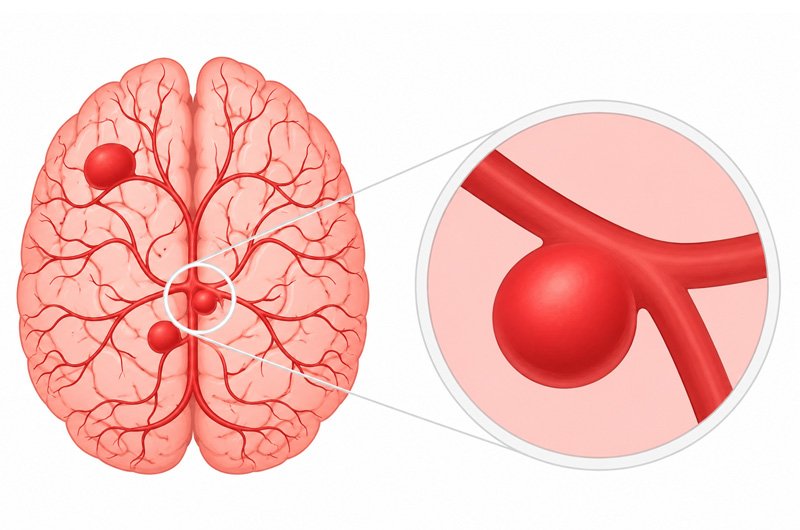
A brain aneurysm (AN-yoo-riz-um) is a bulge or ballooning in a blood vessel in the brain. It often looks like a berry hanging on a stem.
A brain aneurysm can leak or rupture, causing bleeding into the brain (hemorrhagic stroke). Most often a ruptured brain aneurysm occurs in the space between the brain and the thin tissues covering the brain. This type of hemorrhagic stroke is called a subarachnoid hemorrhage.
A ruptured aneurysm quickly becomes life-threatening and requires prompt medical treatment.
Most brain aneurysms, however, don’t rupture, create health problems or cause symptoms. Such aneurysms are often detected during tests for other conditions.
Symptoms
A sudden, severe headache is the key symptom of a ruptured aneurysm. This headache is often described as the “worst headache” ever experienced.
Common signs and symptoms of a ruptured aneurysm include:
- Sudden, extremely severe headache
- Nausea and vomiting
- Stiff neck
- Blurred or double vision
- Sensitivity to light
- Seizure
- A drooping eyelid
- Loss of consciousness
- Confusion
Causes
The causes of brain aneurysm are unknown, but a range of factors may increase your risk.
Risk Factors
A number of factors can contribute to weakness in an artery wall and increase the risk of a brain aneurysm or aneurysm rupture. Brain aneurysms are more common in adults than in children and more common in women than in men.
Some of these risk factors develop over time; others are present at birth.
Risk factors that develop over time, these include:
- Older age
- Cigarette smoking
- High blood pressure (hypertension)
- Drug abuse, particularly the use of cocaine
- Heavy alcohol consumption
Some types of aneurysms may occur after a head injury (dissecting aneurysm) or from certain blood infections (mycotic aneurysm).
Risk factors present at birth
Selected conditions that date to birth can be associated with an elevated risk of developing a brain aneurysm. These include:
- Inherited connective tissue disorders, such as Ehlers-Danlos syndrome, that weaken blood vessels.
- Polycystic kidney disease, an inherited disorder that results in fluid-filled sacs in the kidneys and usually increases blood pressure.
- Abnormally narrow aorta (coarctation of the aorta), the large blood vessel that delivers oxygen-rich blood from the heart to the body
- Family history of a brain aneurysm, particularly a first-degree relative, such as a parent, brother, sister, or child
Complications
When a brain aneurysm ruptures, the bleeding usually lasts only a few seconds. The blood can cause direct damage to surrounding cells, and the bleeding can damage or kill other cells. It also increases pressure inside the skull.
If the pressure becomes too elevated, the blood and oxygen supply to the brain may be disrupted to the point that loss of consciousness or even death may occur.
Treatment
There are two common treatment options for a ruptured brain aneurysm.
- Surgical clipping is a procedure to close off an aneurysm. The neurosurgeon removes a section of your skull to access the aneurysm and locates the blood vessel that feeds the aneurysm. Then he or she places a tiny metal clip on the neck of the aneurysm to stop blood flow to it.
- Endovascular coiling is a less invasive procedure than surgical clipping. The surgeon inserts a hollow plastic tube (catheter) into an artery, usually in your groin, and threads it through your body to the aneurysm.