
Department of Nephrology & Kidney Sciences
Kidney disease is one of India’s most silently progressing health conditions, affecting millions of people who remain undiagnosed until the disease has already advanced significantly. At Swasthyam Superspeciality Hospital, a well known nephrology hospital in Nagpur, we are committed to changing that for patients across Nagpur and the Vidarbha region.
Our Department of Nephrology offers comprehensive kidney care under one roof, from early detection and medical management to advanced dialysis services and critical care nephrology. Our team combines deep specialist expertise with a patient-first approach, helping every patient protect their kidney function, manage their condition confidently, and maintain the best possible quality of life.
Whether you are seeking care at a kidney hospital in Nagpur for a routine check-up, managing a long-term condition like chronic kidney disease or diabetic nephropathy, or requiring urgent care for an acute kidney injury, Swasthyam Superspeciality Hospital is your renowned kidney specialist hospital in Nagpur, equipped to provide the right care at every stage of your kidney health journey.
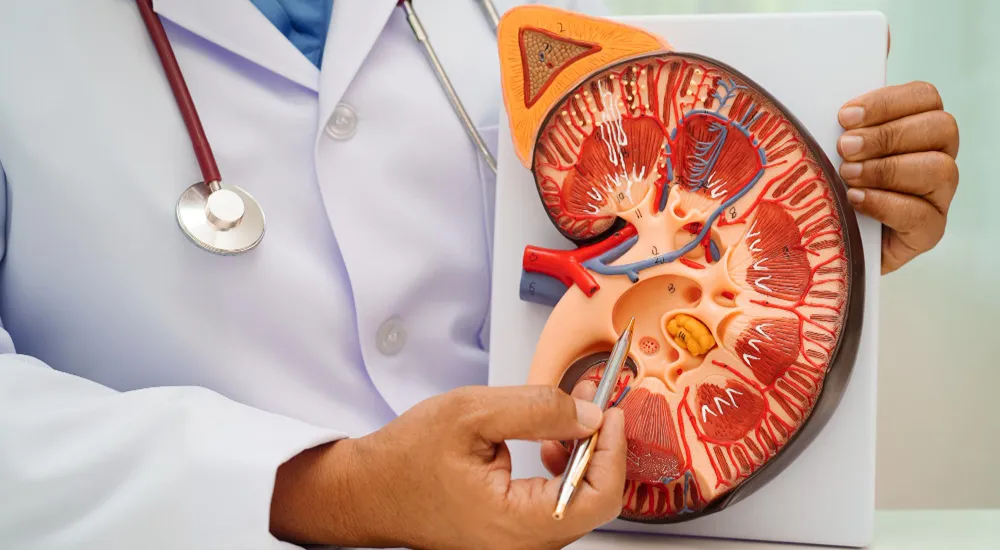
Why Choose Swasthyam Superspeciality Hospital
Kidney conditions require long-term, relationship-based care and not just a one-time consultation. At Swasthyam, we understand that managing kidney disease is a lifelong commitment and we are here to walk that journey with every patient. Here is why patients across Nagpur and Central India trust us for their kidney care.
Advanced Dialysis Unit and Kidney Care Technology
Swasthyam Superspeciality Hospital is equipped with a dedicated, state-of-the-art dialysis unit offering the full range of renal replacement therapies. Our dialysis facility is designed to provide safe, comfortable, and effective treatment for patients requiring regular or acute dialysis support.
Comprehensive Care from Diagnosis to Long-Term Management
What sets us apart is our ability to manage every aspect of a patient’s kidney health journey under one roof. From the very first consultation to ongoing disease monitoring and dialysis support, our team ensures continuity of care at every stage.
24/7 Emergency Kidney Care
Acute kidney injuries and sudden deterioration in kidney function require immediate specialist intervention. Swasthyam’s emergency nephrology unit is staffed around the clock, ensuring rapid assessment and treatment for every urgent kidney care situation.
Affordable, Transparent, and Friendly Care
At Swasthyam Superspeciality Hospital, we believe that financial constraints should never limit access to quality kidney care. We are committed to making advanced nephrology treatment accessible and affordable for every patient.
Meet Our Kidney Specialist at Renowned Kidney Care Hospital
At our nephrology department, our team houses a highly skilled and experienced kidney specialist dedicated to delivering advanced kidney care to patients across Nagpur and the Vidarbha region. Our renal expert specialises in diagnosing, treating and managing the complete spectrum of kidney conditions, from early-stage chronic kidney disease to complex acute kidney injuries and critical care nephrology.
As one of the well known kidney hospitals in Nagpur, we provide comprehensive nephrology care supported by advanced dialysis technology, in-house kidney diagnostics and a multidisciplinary approach that integrates nephrology with critical care, dietetics and general medicine.

Dr. Milind Dekate
Consultant Nephrologist & Transplant Physician
MBBS, MD(Medicine), DNB(Nephrology)
21 Years Experience
Educational Qualifications
- M.B.B.S.: Indira Gandhi Government Medical College (I.G.G.M.C), Nagpur (2000 to 2005)
- M.D. (General Medicine): T.N. Medical College & B.Y.L. Nair Hospital, Mumbai (2008 to 2011)
- D.N.B. (Nephrology): Muljibhai Patel Urological Hospital, Nadiad, Gujarat (2015 to 2018)
Excellence in Dialysis Services
For patients with advanced kidney disease, dialysis is not just a treatment, it is a lifeline. At Swasthyam Superspeciality Hospital, our dedicated dialysis unit is built around one goal, providing safe, effective, and comfortable renal replacement therapy that supports our patients in maintaining the best possible quality of life.
Haemodialysis
Haemodialysis is the most widely used form of dialysis, where blood is filtered through a specialised dialysis machine to remove waste products, excess fluids and toxins that the kidneys can no longer process on their own. Our haemodialysis unit is equipped with modern, high-efficiency dialysis machines and staffed by experienced dialysis technicians who monitor every session closely.
- Suitable for patients with chronic kidney disease stage 5 and acute kidney injury
- Sessions typically performed 3 times a week, each lasting 3 to 4 hours
- Individual dialysis stations with strict hygiene and infection control protocols
- Regular monitoring of dialysis adequacy for optimal patient outcomes
- Vascular access management, including AV fistula care and temporary catheter support
Peritoneal Dialysis (CAPD)
Continuous Ambulatory Peritoneal Dialysis (CAPD) is a home-based dialysis option that uses the lining of the abdomen as a natural filter to clean the blood. It offers patients greater flexibility and independence compared to in-centre haemodialysis, making it particularly suitable for working adults, elderly patients and those who live far from the hospital.
- A gentle, continuous dialysis method performed by the patient at home
- Comprehensive patient and caregiver training provided at Swasthyam
- Regular follow-up consultations to monitor fluid balance and dialysis adequacy
- Suitable for selected patients based on clinical assessment and lifestyle factors
- Ongoing support and troubleshooting from our nephrology team
Continuous Renal Replacement Therapy (CRRT)
Continuous Renal Replacement Therapy is a specialised, slow and continuous form of dialysis used exclusively for critically ill patients with acute kidney injury who are haemodynamically unstable and unable to tolerate standard haemodialysis.
- Indicated for critically ill patients in the ICU with acute kidney injury
- Provides gentle, continuous fluid and solute removal over 24 hours
- Closely monitored by both the nephrology and critical care teams
- Helps stabilise patients before transitioning to standard dialysis or recovery
- Available round the clock for emergency critical care nephrology situations
List of Nephrology Treatments at Swasthyam Superspeciality Hospital
Medical Treatments
Chronic Kidney Disease (CKD) Management
A structured, long-term medical program to slow the progression of kidney disease, manage symptoms, preserve remaining kidney function and delay the need for dialysis through medications, dietary modifications and regular monitoring.
Acute Kidney Injury (AKI) Treatment
Rapid medical intervention to identify and address the underlying cause of sudden kidney function loss, stabilise the patient and support kidney recovery through fluid management, medications and if needed, dialysis support.
Diabetic Nephropathy Management
Specialised medical management for kidney damage caused by long-standing diabetes, focusing on blood sugar control, blood pressure optimisation, protein restriction and targeted medications to protect kidney function.
Hypertensive Nephropathy Treatment
Treatment and monitoring of kidney damage caused by uncontrolled high blood pressure, combining antihypertensive therapy with kidney function surveillance and lifestyle modification.
Glomerulonephritis Treatment
Medical management of inflammatory kidney conditions affecting the glomeruli, including immunosuppressive therapy, steroids and supportive care tailored to the specific type and severity of glomerular disease.
Kidney Stone Management
Comprehensive evaluation and medical management of recurrent kidney stones, including dietary modifications, hydration therapy and medications to prevent stone formation and reduce recurrence risk.
Urinary Tract Infection (UTI) Management
Diagnosis and treatment of recurrent or complex urinary tract infections, including culture-guided antibiotic therapy and investigation of underlying structural or functional causes.
Anaemia of Chronic Kidney Disease
Management of anaemia associated with kidney disease through erythropoiesis-stimulating agents, iron supplementation and regular haemoglobin monitoring to improve patient energy levels and quality of life.
Electrolyte and Fluid Disorder Management
Diagnosis and correction of imbalances in sodium, potassium, calcium, phosphorus and fluid levels commonly seen in kidney disease patients, particularly those on dialysis.
Renal Bone Disease Management
Treatment of mineral and bone disorders arising from chronic kidney disease, including management of secondary hyperparathyroidism, calcium-phosphorus imbalance and bone density loss.
Procedural and Interventional Nephrology
Kidney Biopsy
A minimally invasive procedure to obtain a small sample of kidney tissue for microscopic examination, helping diagnose complex kidney conditions such as glomerulonephritis, lupus nephritis and unexplained kidney disease with precision.
Temporary Dialysis Catheter Insertion
Placement of a temporary central venous catheter to provide immediate vascular access for emergency haemodialysis in patients who do not yet have a permanent access in place.
AV Fistula Assessment and Care
Evaluation and ongoing management of arteriovenous fistulas, the preferred long-term vascular access for haemodialysis patients, including regular monitoring for complications such as stenosis or thrombosis.
Peritoneal Dialysis Catheter Insertion
Surgical placement of a peritoneal catheter to enable home-based CAPD therapy, performed in a controlled setting with comprehensive post-procedure care and patient training.
Ultrasound-Guided Procedures
Use of real-time ultrasound imaging to guide kidney biopsies, fluid drainage and other nephrology procedures with greater accuracy and reduced risk of complications.
Advanced Technology & Facilities at Swasthyam Superspeciality Hospital
Delivering high-quality kidney care requires more than just clinical expertise. It demands the right technology, the right infrastructure, and the right environment for both diagnosis and treatment. Our nephrology department is equipped with advanced facilities designed to support accurate diagnosis, effective treatment and safe, comfortable dialysis for every patient.
State-of-the-Art Dialysis Unit
Our dedicated dialysis unit is one of the most well-equipped kidney care facilities in Nagpur, designed to meet the needs of both regular long-term dialysis patients and those requiring acute or emergency renal replacement therapy.
Kidney Biopsy Facility
An accurate diagnosis is the foundation of effective kidney treatment. Our in-house kidney biopsy facility allows our nephrology team to obtain kidney tissue samples for detailed microscopic analysis, enabling precise diagnosis of complex and rare kidney conditions that cannot be identified through blood or urine tests alone.
Advanced Diagnostic Imaging & Laboratory
Timely and accurate diagnosis is critical in nephrology. Our in-house diagnostic facilities eliminate the need for external referrals and enable rapid assessment of kidney function, structure, and related systemic conditions.
Critical Care Nephrology Unit
Kidney failure in critically ill patients demands a highly coordinated, round-the-clock response. Our critical care nephrology unit operates in close collaboration with the intensive care team, ensuring that patients with acute kidney injury or multi-organ involvement receive immediate and specialised renal support.
Frequently Asked Questions
Can chronic kidney disease be cured?
Chronic kidney disease cannot be completely cured, but it can be effectively managed. With the right treatment, dietary changes and lifestyle modifications, disease progression can be significantly slowed and a good quality of life maintained for many years.
Is dialysis needed for life?
In cases of chronic kidney disease stage 5, dialysis is typically a long-term requirement. However, in cases of acute kidney injury, dialysis may only be temporary until kidney function recovers. Your nephrologist will guide you on the duration based on your specific condition.
How often do dialysis patients need to visit the hospital?
Most haemodialysis patients require three sessions per week, each lasting approximately 3 to 4 hours. Peritoneal dialysis patients perform exchanges at home daily and visit the hospital periodically for monitoring and follow-up consultations.
Is it safe to continue daily activities while on dialysis?
Yes, most dialysis patients can continue with their daily routines, work, and light physical activities between sessions. Our nephrology team provides personalised dietary and lifestyle guidance to help patients maintain as normal a life as possible while on dialysis.
What foods should kidney disease patients avoid?
Kidney disease patients are generally advised to limit foods high in potassium, phosphorus, and sodium, such as bananas, dairy products, processed foods, and red meat. Protein intake may also need to be moderated depending on the stage of kidney disease. Our team provides detailed dietary counselling tailored to each patient’s condition.
At what stage of kidney disease should I see a nephrologist?
Ideally, you should consult a nephrologist as early as possible, even at stage 1 or 2 of Chronic kidney disease, to slow progression and prevent complications. Many patients are referred only at advanced stages, which limits treatment options. Early intervention always leads to better long-term outcomes.