What is Varicose Veins?
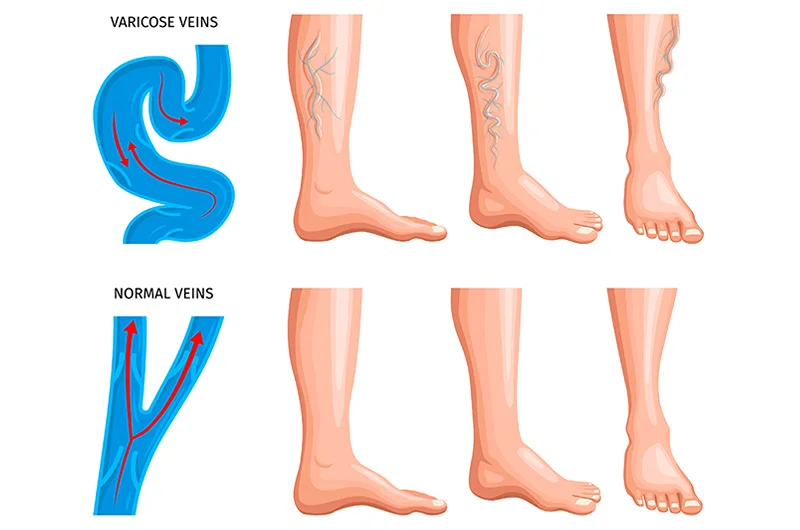
Varicose veins are twisted, enlarged veins. Any superficial vein may become varicosed, but the veins most commonly affected are those in your legs. That’s because standing and walking upright increases the pressure in the veins of your lower body.
For many people, varicose veins and spider veins — a common, mild variation of varicose veins — are simply a cosmetic concern. For other people, varicose veins can cause aching pain and discomfort. Sometimes varicose veins lead to more-serious problems.
Treatment may involve self-care measures or procedures by your doctor to close or remove veins.
Symptoms
Varicose veins may not cause any pain. Signs you may have varicose veins include:
- Veins that are dark purple or blue in color
- Veins that appear twisted and bulging; they are often like cords on your legs
When painful signs and symptoms occur, they may include:
- An achy or heavy feeling in your legs
- Burning, throbbing, muscle cramping and swelling in your lower legs
- Worsened pain after sitting or standing for a long time
- Itching around one or more of your veins
- Skin discoloration around a varicose vein
Spider veins are similar to varicose veins, but they’re smaller. Spider veins are found closer to the skin’s surface and are often red or blue.
Spider veins occur on the legs, but can also be found on the face. They vary in size and often look like a spider’s web.
Causes
Weak or damaged valves can lead to varicose veins. Arteries carry blood from your heart to the rest of your tissues, and veins return blood from the rest of your body to your heart, so the blood can be recirculated. To return blood to your heart, the veins in your legs must work against gravity.
Muscle contractions in your lower legs act as pumps, and elastic vein walls help blood return to your heart. Tiny valves in your veins open as blood flows toward your heart then close to stop blood from flowing backward. If these valves are weak or damaged, blood can flow backward and pool in the vein, causing the veins to stretch or twist.
Risk Factors
These factors increase your risk of developing varicose veins:
- Age: The risk of varicose veins increases with age. Aging causes wear and tear on the valves in your veins that help regulate blood flow. Eventually, that wear causes the valves to allow some blood to flow back into your veins where it collects instead of flowing up to your heart.
- Sex: Women are more likely to develop the condition. Hormonal changes before your period or during pregnancy or menopause might be a factor because female hormones tend to relax vein walls. Hormone treatments, such as birth control pills, might increase your risk of varicose veins.
- Pregnancy: During pregnancy, the volume of blood in your body increases. This change supports the growing fetus, but also can produce an unfortunate side effect — enlarged veins in your legs. Hormonal changes during pregnancy may also play a role.
- Family History: If other family members had varicose veins, there’s a greater chance you will too.
- Obesity: Being overweight puts added pressure on your veins.
- Standing or sitting for long periods of time: Your blood doesn’t flow as well if you’re in the same position for long periods.
Prevention
There’s no way to completely prevent varicose veins. But improving your circulation and muscle tone may reduce your risk of developing varicose veins or getting additional ones. The same measures you can take to treat the discomfort from varicose veins at home can help prevent varicose veins, including:
- Exercising
- Watching your weight
- Eating a high-fiber, low-salt diet
- Avoiding high heels and tight hosiery
- Elevating your legs
- Changing your sitting or standing position regularly
Treatment
Fortunately, treatment usually doesn’t mean a hospital stay or a long, uncomfortable recovery. Thanks to less invasive procedures, varicose veins can generally be treated on an outpatient basis.
Ask your doctor if insurance will cover any of the cost of your treatment. If done for purely cosmetic reasons, you’ll likely have to pay for the treatment of varicose veins yourself.
Self Care
such as exercising, losing weight, not wearing tight clothes, elevating your legs, and avoiding long periods of standing or sitting — can ease pain and prevent varicose veins from getting worse.
Compression Stockings
Wearing compression stockings all day is often the first approach to try before moving on to other treatments. They steadily squeeze your legs, helping veins and leg muscles move blood more efficiently. The amount of compression varies by type and brand.
You can buy compression stockings at most pharmacies and medical supply stores. Prescription-strength stockings also are available, and are likely covered by insurance if your varicose veins are causing symptoms.