
What is 2D Echocardiography?
2D Echocardiography, often referred to as 2D Echo, is a non-invasive imaging method that allows for the visualisation of the heart’s structure and function. It uses high-frequency sound waves, or ultrasound, to create detailed two-dimensional images of the heart. This test helps cardiologists assess the heart’s chambers, valves, and overall cardiac function, providing crucial information for diagnosing various heart conditions.
Why is 2D Echocardiography Performed?
The 2D Echocardiography test is performed to evaluate heart health, diagnose heart diseases, and monitor the effectiveness of ongoing treatments. It helps in identifying conditions such as heart valve abnormalities, congenital heart defects, and cardiomyopathy. It is also used to determine the heart’s pumping efficiency and to guide treatment decisions for various cardiac conditions.
How is 2D Echocardiography Performed?
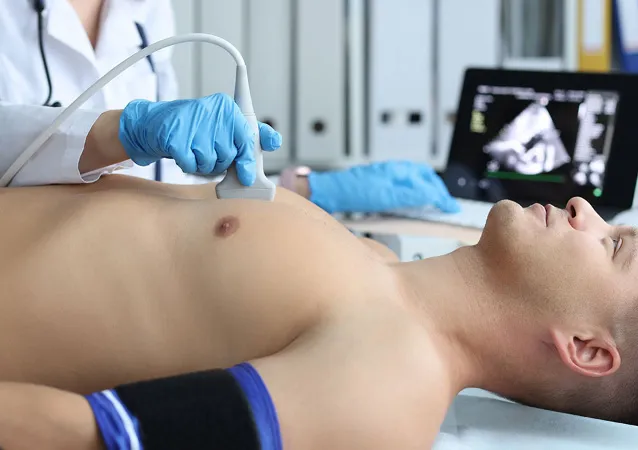
During a 2D Echocardiography test, a gel is applied to the patient’s chest to ensure proper contact between the skin and the ultrasound transducer. The transducer, a handheld device, is moved over the chest to capture images of the heart from different angles. These images are displayed on a monitor, allowing the cardiologist to evaluate the heart’s structure and function in real time. The procedure is painless and typically takes 30 to 60 minutes to complete.
Who is 2D Echocardiography Useful For?
Individuals with Symptoms of Heart Disease
Useful for patients experiencing symptoms such as chest pain, shortness of breath, or palpitations to diagnose underlying issues.
Patients with Known Heart Conditions
Essential for monitoring the progression of heart disease and evaluating the effectiveness of ongoing treatments.
Pre-Surgical Assessment
Helps assess heart function and condition before undergoing major surgeries to ensure optimal heart health.
Individuals at Risk
Beneficial for those with risk factors like high blood pressure, diabetes, or a family history of heart disease to assess and manage potential cardiac issues.
Frequently Asked Questions
What are the benefits of a 2D Echocardiography test?
The 2D Echocardiography test provides real time images of the heart, allowing for accurate diagnosis and assessment of heart conditions. It is non-invasive and does not involve radiation, making it a safe and effective tool for evaluating heart health.
How should I prepare for a 2D Echocardiography test?
You may be asked to avoid eating a large meal right before the test. Wear comfortable clothing and be prepared to lie on an examination table during the procedure.
Is the 2D Echocardiography test painful?
No, the 2D Echocardiography test is completely painless. The most you might feel is slight discomfort from the pressure of the transducer on your chest. The gel applied to your skin might be a bit cold but is harmless.
How long does a 2D Echocardiography test take?
The test usually takes between 30 to 60 minutes. The duration may vary depending on the complexity of the examination and the specific areas that need to be assessed.
When will I receive the results of my 2D Echocardiography test?
After the test is completed, the images are analysed by a cardiologist, and a report is prepared. You will typically receive the results during a follow up appointment with your cardiologist, where the findings will be discussed in detail.
Can a 2D Echo detect blocked arteries?
A 2D Echo primarily evaluates heart structure, valve function, and pumping efficiency. It does not directly visualise blocked coronary arteries, which require tests such as coronary angiography for accurate detection.
Is 2D Echo better than ECG?
Neither test is better than the other, as they serve different purposes. An ECG checks the heart’s electrical activity, while a 2D Echo shows the heart’s structure and pumping function. Cardiologists often use both together for a complete and accurate evaluation.
Is fasting required before a 2D Echo test?
No special fasting is required for a standard 2D Echo test. However, your cardiologist may advise avoiding a heavy meal shortly before the procedure for comfort during the test.
What does a 2D Echo show?
A 2D Echo shows the size and shape of the heart, the thickness and movement of the heart walls, the function of the heart valves, and the overall pumping efficiency of the heart, helping identify a wide range of cardiac conditions.